What Every Store Owner Should Know Before Choosing a Fashion WooCommerce Theme
- Michael Cody

- 1 day ago
- 7 min read
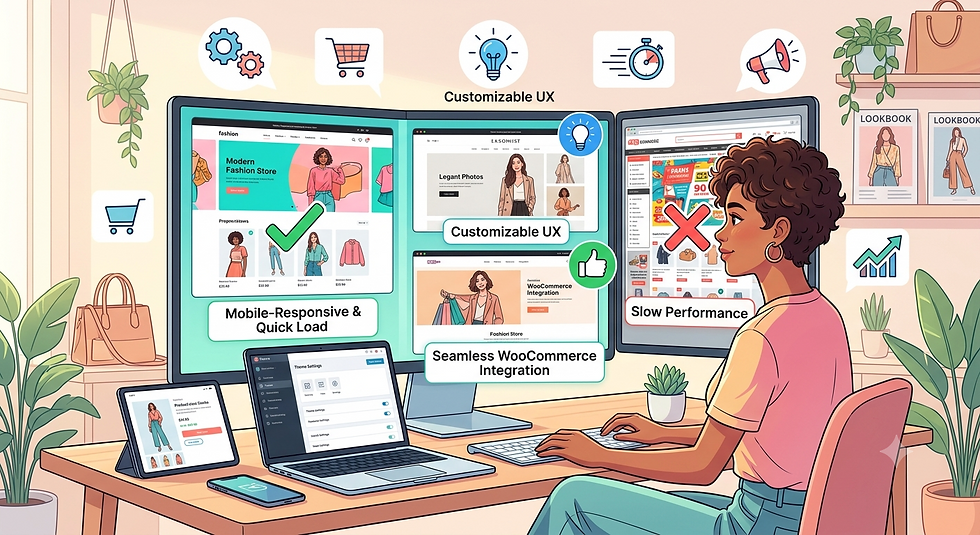
Scrolling through theme marketplaces looking for something for your fashion store can turn into an overwhelming task pretty quickly. There are countless options, most looking reasonably polished in their demo screenshots, and it's genuinely difficult to tell which ones will actually hold up once you've loaded in your real catalog, your actual product photography, and your specific variation combinations. A lot of store owners end up choosing based on first impressions alone, only to discover months later that the theme can't handle their catalog size, slows down significantly, or is missing features they didn't realize they needed until it was too late. Choosing the right Fashion WooCommerce Theme helps you avoid these problems by offering fast performance, WooCommerce compatibility, responsive design, advanced product filtering, flexible customization, and scalable features that support your store as it grows.
This guide walks through the practical, real-world considerations that genuinely matter when choosing a fashion WooCommerce theme, helping you make a decision based on actual functionality and fit rather than just how nice the demo photos look.
Start With a Clear Understanding of Your Catalog Needs
Before browsing any themes, it helps to get specific about what your fashion business actually needs the website to handle, since this shapes every other decision in the process.
Consider Your Product Variation Complexity
If your clothing involves multiple sizes, colors, and possibly fit options per item, you'll need a theme that displays these variations clearly without becoming confusing or cluttered for customers trying to make a selection.
Think About Your Catalog Size and Turnover Rate
A boutique with a smaller, curated catalog has different needs than a fast fashion brand cycling through hundreds of new items each season, so keep your actual inventory patterns in mind while evaluating themes.
Common Mistakes Store Owners Make During Selection
Before diving into what to look for, it's worth understanding where a lot of fashion retailers go wrong when choosing a theme.
Choosing Based Purely on Visual Appeal
It's tempting to pick a theme simply because the demo photos look stylish, without confirming whether it actually handles essential functionality like proper variation display or filtering that your specific catalog requires.
Not Testing With Realistic Product Data
Demo content is typically clean and minimal, but your actual catalog, with all its variations and volume, might behave quite differently, so it's worth testing with realistic data before finalizing your decision.
Overlooking How the Theme Handles Sales and Promotions
Fashion retail often relies heavily on sales events and promotional periods, and some store owners don't consider until later how well or poorly a theme displays discounts, sale badges, or promotional banners.
Essential E-Commerce Features to Verify
Since your fashion store is fundamentally an online shop, certain e-commerce functionalities are non-negotiable when evaluating any theme option.
Genuine WooCommerce Compatibility
Confirm the theme is specifically built and tested for smooth WooCommerce integration, rather than requiring awkward workarounds or extensive additional coding to function properly.
Robust Variation and Filtering Support
Check that the theme handles size, color, and other variation combinations cleanly, while also supporting the kind of detailed filtering fashion customers expect when browsing larger catalogs.
Secure, Trusted Checkout Options
Verify the theme supports secure, well-recognized payment gateways, since customer trust during checkout directly affects your conversion rates.
Fashion-Specific Features Worth Prioritizing
Beyond general e-commerce functionality, certain features specifically matter for how fashion products get presented and sold online.
Lookbook and Editorial Layout Support
Look for themes that support lookbook-style presentations, showing complete outfits or styling combinations, rather than only offering standard individual product grid layouts.
Size Guide and Fit Information Display
Check whether the theme makes it easy to include clear size charts and fit guidance directly on product pages, since sizing confusion is a major factor in fashion returns and customer hesitation.
Wishlist and Save-for-Later Functionality
Since fashion shopping often involves browsing and reconsidering before purchasing, themes supporting wishlist features help capture interest from customers who aren't ready to buy immediately.
Performance Factors That Directly Affect Sales
A beautiful theme that performs poorly can quietly undermine your sales, regardless of how polished it looks in screenshots.
Test Loading Speed With Real Product Photography
Since fashion relies heavily on quality imagery, test how the theme performs once loaded with your actual high-resolution photos, rather than relying on the lightweight demo version alone.
Confirm Strong Mobile Responsiveness
Given how much fashion shopping traffic comes from mobile devices, thoroughly test the theme's mobile performance across browsing, filtering, and checkout, not just how it looks on a desktop preview.
Check How It Handles Traffic Spikes
If you plan to run sales events or collection launches, confirm the theme can handle sudden traffic increases without slowing down or crashing at exactly the moments that matter most.
Customization and Branding Considerations
Flexibility to Reflect Your Specific Brand Identity
Fashion brands often rely heavily on distinct visual identity, so ensure the theme offers enough customization in colors, typography, and layout to genuinely reflect your brand rather than looking generic.
Ease of Customization Without Constant Developer Reliance
Check whether the theme integrates well with page builders like Elementor, allowing you to update content, launch new collections, or adjust layouts yourself without needing ongoing developer assistance.
Compatibility With Essential Marketing Tools
Verify the theme works well with tools you rely on, like email marketing platforms, loyalty program plugins, or social commerce integrations relevant to your specific fashion business.
Budget and Long-Term Value Considerations
Understanding the Trade-Offs of Free Themes
While free themes might seem appealing initially, they often lack fashion-specific features, reliable support, and the performance optimization needed for a growing online fashion business.
Weighing Premium Options Against Long-Term Costs
Investing in a well-supported premium theme often proves more cost-effective over time, through better performance, more relevant features, and reduced need for extensive custom development.
Factoring in Additional Plugin Costs
Some themes require additional paid plugins to unlock features like advanced filtering, loyalty programs, or lookbook functionality, so consider the complete cost picture rather than just the initial theme price.
Testing and Evaluating Before You Commit
Explore the Live Demo Thoroughly as a Customer Would
Rather than just glancing at screenshots, actually navigate through the demo as if you were shopping, testing filtering, product pages, and the checkout flow directly.
Seek Reviews From Other Fashion Retailers Specifically
Feedback from other fashion sellers who've used the theme provides far more relevant insight into real-world performance compared to generic reviews from unrelated industries.
Check the Developer's Update History and Support Reputation
Look into how frequently the theme receives updates and how responsive the developer's support team has been, since this directly affects your website's long-term reliability and security.
Planning for Future Growth
Scalability as Your Catalog Expands
Choose a theme that maintains strong performance even as your product count grows significantly, rather than one that only performs well with a small, initial catalog.
Flexibility for Multiple Sales Channels
If you plan to expand into additional platforms like Instagram Shopping or marketplaces, consider whether the theme supports the kind of integration needed for effective multi-channel selling down the line.
Room to Add New Features Over Time
As your fashion business evolves, whether through loyalty programs, personalization features, or new marketing tools, choose a theme flexible enough to accommodate these additions without requiring a complete rebuild.
Making Your Final Decision
Prioritize Based on Your Specific Business Needs
Revisit your original catalog and business requirements, weighing potential themes against these specific needs rather than getting distracted by unrelated features you're unlikely to use.
Consider Testing With a Trial Period
If possible, load your actual products and content into the theme before fully committing, giving you a realistic sense of how it will perform for your specific fashion catalog.
Plan for Ongoing Support and Development
Choose a theme from a developer with a solid track record of updates and support, ensuring your website remains secure, functional, and relevant well into the future.
Conclusion
Choosing the right fashion WooCommerce theme requires looking well beyond attractive demo screenshots, into genuine functionality around variation handling, performance with real photography, and scalability as your catalog and traffic grow. Taking the time to properly test and evaluate these practical factors helps you avoid costly mistakes and wasted time down the road. If you're ready to make a confident, well-informed choice, exploring well-designed premium wordpress templates built specifically for fashion and clothing retail businesses gives you a strong, feature-rich foundation to build your store around. A thoughtful theme choice now can save significant frustration and support your fashion brand's growth for years to come.
FAQs
1. Do I need a fashion-specific theme, or can I use a general WooCommerce theme?
A general theme can technically work, but a fashion-specific one usually saves significant time and effort since it already includes features like lookbook layouts, size guide support, and variation displays tailored to how clothing is actually sold online.
2. How important is testing with real product photos before choosing a theme?
Very important, since some visually appealing themes slow down considerably once populated with actual high-resolution fashion photography, which can significantly affect customer experience and conversion rates.
3. Should I prioritize design or functionality when comparing different themes?
Ideally both matter, but functionality should take priority, since a beautiful theme missing essential features like proper variation handling or reliable mobile performance will likely cause more problems than a slightly less polished but fully functional option.
4. Can I switch themes later if I choose the wrong one initially?
Yes, though switching later usually involves some rework, especially with product data and formatting, so it's worth investing time upfront to choose carefully and minimize the need for switching down the line.
5. Are premium WordPress templates worth the investment for a fashion store specifically?
Generally yes, since premium templates designed for fashion retail typically include essential presentation and performance features that directly support better conversions and a more professional, scalable online store.

Comments